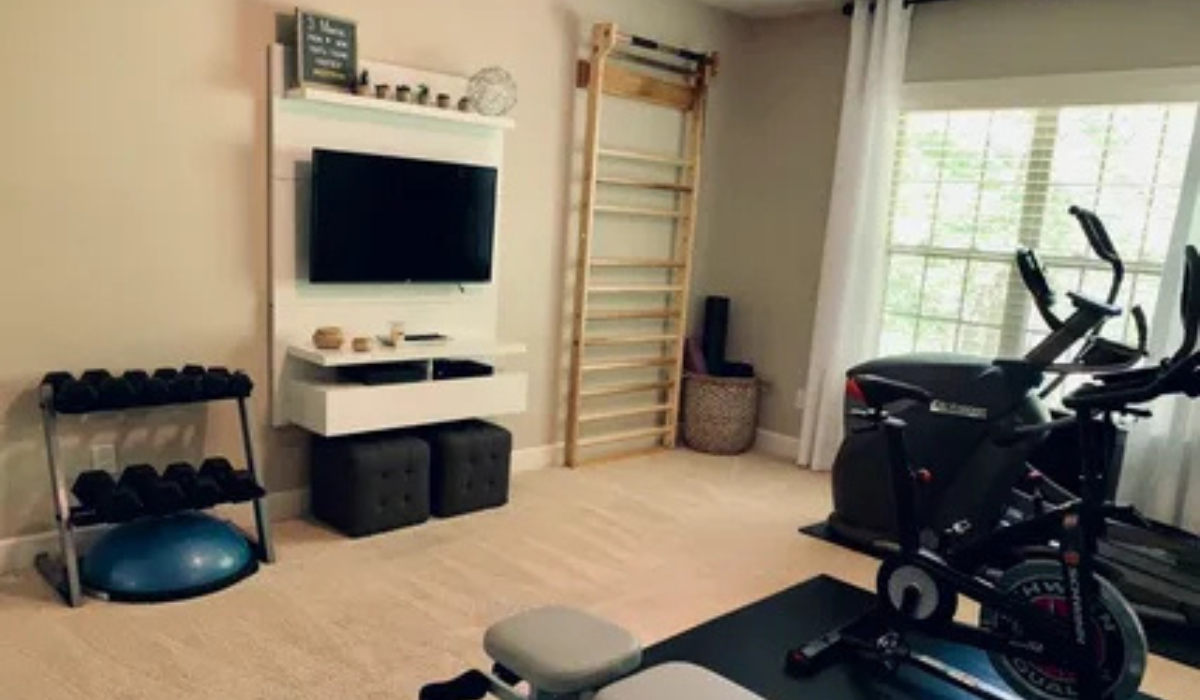
A good home gym does not need an entire garage, expensive machines, or a room that looks like a professional fitness club. With the right home gym ideas, you can turn an unused bedroom corner, spare room, basement, or garage into a workout space that fits your routine, available space, and budget.
The biggest mistake is buying equipment before deciding how you will use the room. A treadmill may look impressive, but it is not much help if your main goal is strength training and it leaves you with no room to move. A few carefully chosen items can be far more useful than a room full of equipment you rarely touch.
In this guide, we will look at practical home gym designs for small spaces, dedicated workout rooms, and garages. You will also learn how to plan your layout, choose flooring, improve lighting, organize equipment, and avoid common setup mistakes.
1. Start With a Home Gym Layout That Fits Your Routine
Before choosing paint colors or shopping for equipment, decide what you want your home gym to help you accomplish. Your training routine should determine the layout, not the other way around.
For example, a person who enjoys yoga and stretching needs a different setup from someone who prefers strength training or indoor cycling.
Start by measuring the available floor space, ceiling height, doorways, and access to electrical outlets. Mark the areas where equipment will stand and leave enough room to use it comfortably.
Create Separate Workout Zones
If you have enough space, divide the room into three simple areas:
- Strength zone: A stable surface for your bench, dumbbells, and other strength-training equipment.
- Cardio zone: Space for a stationary bike, treadmill, or other cardio equipment.
- Open movement zone: An uncluttered area for stretching, mobility exercises, and bodyweight movements.
You do not need walls or expensive partitions to create these zones. A different flooring surface, a storage rack, or a simple change in furniture placement can make the layout easier to follow.
Pro tip: Use masking tape to mark the approximate equipment footprint on the floor before buying anything. This inexpensive test can reveal whether a machine blocks a doorway or leaves too little room for movement.
2. Turn a Small Corner Into a Home Gym
You do not need a dedicated room to exercise at home. An unused corner of a bedroom, office, or spare room can accommodate a practical workout setup.
The secret is choosing equipment that serves several purposes and stores neatly when you finish exercising.
Choose Compact, Multi-Purpose Equipment
Consider starting with:
- A workout mat for floor exercises and stretching.
- Resistance bands for a variety of resistance exercises.
- Adjustable dumbbells, if appropriate for your training needs.
- A foldable bench that can be stored against a wall.
- A small storage rack or basket for accessories.
Keep the equipment together so you can set up quickly without rearranging the entire room.
A corner gym also works well in a shared household because you can return the room to its normal use after exercising.
Pro tip: Measure the equipment in both its working and stored positions. A folding bench is only a space-saving purchase if you have somewhere suitable to store it.
3. Design a Home Gym in Your Garage
A garage can provide more flexibility than a bedroom because it may offer extra floor space and easier access for moving bulky equipment. However, garages can also become hot, cold, dusty, or damp, depending on the climate and construction.
Before bringing equipment inside, inspect the floor, check for water intrusion, and consider how you will maintain comfortable airflow.
Make the Most of the Available Space
Arrange larger equipment along a suitable wall while preserving a clear central area for movement. Keep frequently used items accessible and store accessories vertically where practical.
If your garage also needs to accommodate a vehicle, bicycles, or household storage, plan around those uses instead of assuming the entire floor is available.
Rubber gym flooring can help protect the underlying surface, reduce some impact noise, and provide a stable workout area. Heavy equipment still needs an appropriate, level foundation.
Pro tip: If the garage has limited ventilation, address airflow and heat before spending money on decorative upgrades. A beautiful room is not useful if it becomes uncomfortable to exercise in.
4. Build a Minimalist Home Gym
A minimalist home gym is ideal if you prefer a clean room without unnecessary equipment. Instead of filling every corner, you select a small collection of items that support your regular activities.
This approach can also make cleaning, storage, and daily use much easier.
Keep the Design Simple
Choose a restrained color palette, such as white walls, dark flooring, and natural wood accents. Use closed cabinets or matching storage containers to keep smaller items out of sight.
Avoid buying equipment simply because it looks impressive. Each item should have a clear purpose in your routine.
For instance, a mat, resistance bands, and a suitable set of weights may be enough for someone whose workouts focus on basic strength exercises and mobility.
Pro tip: Before adding anything new, use your existing setup consistently for a few weeks. You will have a better understanding of what is genuinely missing.
5. Create a Stylish Home Gym With Modern Decor
Your workout room can look like a natural extension of your home rather than an unfinished storage space. If you want to create a more coordinated interior, explore these home decor ideas for inspiration on colors, furniture, and decorative details that can make your gym feel more inviting.
Architectural Digest’s home gym design coverage highlights the value of personal style, suitable lighting, natural elements, and layouts tailored to the people using the room.
Combine Practicality With Attractive Finishes
Consider these home gym decor ideas:
- Neutral walls that make the room feel calm and uncluttered.
- Rubber flooring in a finish that complements the rest of the interior.
- A framed print or motivational artwork.
- Matching containers for resistance bands and smaller accessories.
- A simple bench or storage unit that fits the home’s existing style.
You can also introduce natural materials through wooden shelves or small decorative accents. Keep plants away from equipment movement areas and choose varieties suited to the room’s light and temperature.
The aim is not to make the gym look like a luxury showroom. It is to create a space you enjoy using.
Pro tip: Choose your flooring and the largest pieces of equipment first. These occupy the most visual space, so coordinating smaller decor items around them is easier than trying to match everything to a decorative feature wall.
6. Install Mirrors for a Brighter, More Open Gym
Mirrors are a practical addition to many home gyms. They can make a compact room feel more spacious and help you observe your movement during suitable exercises.
You do not necessarily need to cover an entire wall. A well-positioned mirror may be enough for a small workout area.
Position Mirrors Carefully
Place mirrors where they provide useful visibility without creating distractions or obstructing equipment access. Use mirrors designed for the intended installation and secure them appropriately.
For strength training, mirrors can provide visual feedback, but they should not replace learning proper technique. Some exercises are also better performed by focusing on controlled movement rather than continuously watching your reflection.
Pro tip: Check what the mirror will reflect before installing it. A reflection of a window can brighten the room, while a reflection of clutter may make the space feel busier.
7. Improve Home Gym Lighting
Lighting can influence how comfortable and practical your gym feels. A dark basement or garage may need a different approach from a bright spare bedroom.
Whenever possible, make use of natural daylight while providing enough artificial lighting for early-morning or evening workouts.
Layer Your Lighting
A simple lighting plan can include:
- General ceiling lighting for the entire room.
- Task lighting where additional visibility is needed.
- Adjustable lighting for a calmer stretching or mobility area.
Choose fixtures suitable for the room’s moisture, temperature, and installation conditions. Keep cords away from walking paths and moving equipment.
If you prefer a modern appearance, simple fixtures and consistent light temperatures can create a cleaner look without a costly renovation.
Pro tip: Test the lighting while standing in the positions you use during exercise. A fixture that looks attractive from the doorway may cast unwanted shadows over your workout area.
8. Choose Flooring That Protects Your Home
Flooring is one of the most important practical decisions when building a home gym. The right surface depends on your equipment, the exercises you perform, and the floor underneath.
A yoga mat, rubber flooring, and a lifting platform all serve different purposes. They should not be treated as interchangeable.
Compare Common Home Gym Flooring Options
| Flooring type | Best use | Important consideration |
|---|---|---|
| Rubber rolls | Covering larger workout areas | Check thickness, surface grip, and compatibility with the subfloor. |
| Rubber tiles | Small or medium training spaces | Make sure the tiles stay stable under equipment. |
| Exercise mats | Yoga, stretching, and floor exercises | Not intended to support every heavy machine or lifting setup. |
| Dedicated lifting platform | Appropriate heavy lifting areas | Requires a level, suitable base and a design matched to the activity. |
| Carpet | Light exercise in some rooms | Can be difficult to clean and may not provide a stable surface for equipment. |
Thicker flooring is not automatically better. Soft surfaces can make certain equipment unstable, and standard foam tiles may compress under concentrated loads.
If you plan to lift heavy weights, investigate suitable rubber flooring and the requirements of your equipment. For an upstairs room, consider the building’s structural capacity before installing heavy equipment.
Pro tip: Plan flooring before positioning racks or machines. It is much easier to install and inspect the surface while the room is empty.
9. Choose Adjustable Equipment for Small Spaces
Adjustable equipment is useful when you want several training options without dedicating floor space to multiple individual items.
Adjustable dumbbells, suitable benches, and resistance bands can support a range of exercises in a compact room.
Buy Equipment Based on Your Actual Needs
Before purchasing, consider:
- The exercises you intend to perform.
- Whether the equipment provides appropriate resistance for your needs.
- How easily it can be adjusted between exercises.
- Whether it fits in the available storage area.
- Whether its construction and safety features are suitable.
Do not assume that the smallest product is automatically the best choice. Equipment should remain comfortable and practical to use, and adjustments should be straightforward.
Pro tip: Compare the full storage footprint, including stands, handles, and accessories. The advertised product dimensions may not tell you how much room the complete setup needs.
10. Organize Your Gym With Vertical Storage
A cluttered floor can make even a spacious home gym feel cramped. Vertical storage helps you keep accessories organized without taking up additional walking space.
Put Every Item in a Defined Place
Depending on your equipment, you might use:
- Shelves for small accessories.
- Wall-mounted hooks for suitable resistance bands.
- A dedicated stand for dumbbells.
- Appropriate storage for mats and foam rollers.
- Manufacturer-approved storage attachments for compatible equipment.
Make sure shelves, hooks, and storage units are rated for the items they carry and installed into suitable supports.
Keep frequently used items at an accessible height. Heavy equipment should not be stored overhead where it could fall onto someone.
Pro tip: Store equipment according to how often you use it. Everyday items should be easy to reach, while occasional accessories can occupy less convenient storage spaces.
11. Design a Home Gym for Cardio Workouts
If you enjoy walking, cycling, or other cardiovascular activities, build your gym around the equipment and movement patterns you actually prefer.
A stationary bike may suit a smaller room, while a treadmill generally requires more floor space and clearance around its moving parts.
Make Cardio Equipment Comfortable to Use
Before buying a machine, check its operating footprint, power requirements, noise level, and maintenance needs. Also consider whether the room has enough airflow to remain comfortable during exercise.
If space is limited, you may prefer walking outdoors, following a suitable indoor movement routine, or using a compact piece of equipment rather than dedicating a large area to a machine.
Pro tip: Test the equipment in person when possible. Comfort, ease of adjustment, and noise can matter more in everyday use than a long list of advertised features.
12. Set Up a Home Gym for Yoga and Stretching
Not every home gym needs weights or large machines. A quiet movement space can support yoga, stretching, mobility exercises, and relaxation.
This setup is especially useful in a bedroom, spare room, or corner that serves multiple purposes.
Keep the Floor Open
Start with a suitable exercise mat and enough room to move through your intended exercises without hitting furniture or walls.
A small shelf or basket can hold blocks, straps, towels, and other accessories. If the room is shared with other activities, choose storage that can be moved or closed away easily.
Soft lighting and a calm color palette can make the area more inviting, but avoid candles or other open flames near workout equipment, fabrics, or stored materials.
Pro tip: Test your full range of movement before finalizing the layout. A space that accommodates sitting and stretching may not be large enough for standing movements with extended arms.
13. Create a Home Gym in a Spare Bedroom
A spare bedroom can become a useful workout area without requiring a permanent conversion.
The challenge is balancing exercise space with the room’s existing functions, particularly if guests still need to use it.
Make the Room Serve Two Purposes
Choose compact equipment that can be stored against a wall or in a suitable cupboard. A foldable bench, mat, and organized collection of smaller accessories may be more practical than large fixed machines.
Keep the bed, wardrobe, and doorways accessible. Avoid placing equipment where it interferes with emergency exits or normal movement around the room.
Pro tip: If the room doubles as a guest bedroom, use storage furniture that looks appropriate in both settings. You will spend less time rearranging the room before visitors arrive.
14. Build a Budget-Friendly Home Gym
You can create a useful home gym without buying every piece of equipment at once. A phased approach helps you understand what you need before making larger purchases. If your project involves changing the room, upgrading the flooring, or improving the lighting, use this home renovation cost calculator to help plan your renovation budget before committing to major expenses.
Start With Essentials, Then Expand
Your first purchases might include a mat and a small collection of suitable training accessories. You can add adjustable weights or a bench later if your routine calls for them.
A simple purchasing sequence is:
- Identify the exercises and activities you want to do.
- Choose a small starter collection of equipment.
- Make sure the room and floor are suitable.
- Use the equipment regularly and identify genuine limitations.
- Add items that solve those limitations.
Avoid spending your entire budget on a single machine before considering the other requirements of the room.
Pro tip: Calculate the total cost, including flooring, storage, delivery, maintenance, and any necessary installation. The advertised equipment price is only part of the budget.
15. Use a Functional Trainer or Multi-Exercise Machine
If you have a dedicated room and want multiple exercise options, a suitable multi-exercise machine may be worth considering.
The right choice depends on the movements you want to perform, the machine’s dimensions, and how much space you can reserve around it.
Check the Complete Footprint
Measure the machine’s height, width, and depth. Then account for the movement of handles, cables, attachments, and any adjustable components.
Some machines also need additional space for plate storage or access to the rear of the unit.
Compare the machine’s features with your actual training requirements rather than choosing the model with the most attachments.
Pro tip: Read the installation and clearance requirements before purchasing. A machine that technically fits through the door may still be difficult to assemble or use in the intended room.
16. Plan a Strength-Training Area Carefully
A strength-training space requires more attention to equipment stability, loading, and clearance than a simple stretching corner.
If your routine includes barbells or a rack, check the equipment’s dimensions and installation requirements before buying it.
Prioritize Stability and Safe Movement
Consider the following:
- A suitable, level floor.
- Equipment rated for its intended use.
- Adequate clearance for the movements you plan to perform.
- Appropriate safety features and attachments.
- Storage that prevents weights from rolling or falling.
- Enough room to enter, exit, and use the equipment comfortably.
Rack dimensions vary, so do not assume that one upright size or rack configuration is suitable for every home gym.
Pro tip: If you intend to perform heavy lifts, seek qualified guidance on equipment setup and safe use. Never improvise load-bearing supports or rely on an unverified homemade attachment.
17. Make Your Home Gym More Comfortable With Ventilation
Airflow is easy to overlook when planning a home gym, particularly if the space is in a garage, basement, or room with few windows.
During exercise, the room can become warm and humid. Poor airflow may also make odors linger.
Improve Air Circulation
Depending on the room, practical options include opening suitable windows, using a fan, or installing an appropriate ventilation system.
In a garage, consider temperature changes, dust, and humidity. If the room has moisture problems, address their source before installing equipment that could corrode or deteriorate.
Make sure fans, cables, and ventilation equipment do not obstruct movement or create hazards around exercise machines.
Pro tip: Spend a few minutes in the room after a normal workout. If it remains excessively warm or stuffy, improve ventilation before adding more equipment.
18. Use Wall Colors to Set the Mood
Color is a relatively affordable way to change the appearance of a home gym.
You might prefer neutral tones for a calm movement space or a darker accent wall for a more defined workout area. Neither approach is universally better; the result depends on the room’s size, natural light, and existing decor.
Choose a Palette That Works With the Room
Consider white, warm gray, muted green, or natural wood tones if you want a restrained design. You can introduce brighter colors through artwork, storage containers, or small accessories.
In a room with limited daylight, be careful with dark finishes across every surface because they may make the space feel smaller.
Pro tip: Test paint samples under the room’s actual lighting before committing to a full wall. Colors can look different in daylight and under artificial lights.
19. Add Smart Technology Only Where It Helps
Technology can make a home gym more convenient, but it should solve a real problem rather than add unnecessary complexity.
A phone or tablet stand, a suitable speaker, or a simple workout-tracking app may be enough for many people.
Keep Screens and Cables Out of the Way
Position screens where you can see them without blocking access to equipment. Secure charging cables and keep electronics away from sweat, water, and moving parts.
Smart mirrors and connected exercise machines can provide guided workouts, but compare their costs, subscription requirements, and long-term usefulness before purchasing.
Pro tip: Start with the technology you already own. Upgrade only when you can identify a feature that genuinely improves your workouts.
20. Make a Basement Home Gym Feel Welcoming
A basement may offer a separate area for exercise, but lighting, humidity, and ceiling height need careful attention.
Before moving in equipment, check for signs of dampness, water entry, or poor ventilation. These problems should be resolved before decorating.
Balance Practical Design With Comfort
Use adequate lighting, a suitable floor surface, and organized storage. If the ceiling is low, select activities and equipment that fit the available clearance rather than forcing a layout designed for a taller room.
A mirror and a few carefully chosen decorative elements can make the space feel more inviting without requiring a major renovation.
Pro tip: Check the ceiling height while standing with your arms extended, especially if you intend to perform overhead movements. Measure the complete movement and equipment clearance, not just your standing height.
21. Add a Dedicated Warm-Up and Recovery Area
A small open area can support warm-ups, mobility work, and post-exercise stretching.
You do not need a separate recovery machine or expensive accessories to make this space useful.
Keep Essential Accessories Accessible
Depending on your routine, you might store a mat, resistance bands, and a foam roller in a small basket or on a shelf.
Keep the area free from loose weights and other objects that could interfere with movement.
Pro tip: Reserve a little open floor space before buying additional equipment. A clear area often provides more practical value than another machine that performs a narrow range of exercises.
22. Design a Shared Home Gym for Different Users
If more than one person will use the gym, their needs should influence the layout from the beginning.
One person may prefer cardio while another focuses on strength training. A shared space needs to accommodate both without creating unnecessary clutter or confusion.
Organize Equipment Around Shared Needs
Keep common accessories in a central storage area and arrange larger items so they can be used without moving everything else.
Where users have different training needs, adjustable equipment and separate activity zones can help. Make sure everyone understands the equipment’s adjustment and safety requirements.
Pro tip: Ask each user to identify the activities they perform most often. Design around those regular needs rather than trying to accommodate every possible workout.
23. Make a Home Gym Quieter
Noise can become an issue when your gym shares walls or floors with bedrooms, living areas, or neighboring homes.
The most effective solution depends on the source of the noise: machine vibration, footfalls, music, or the impact of weights.
Reduce Unnecessary Noise
Consider suitable rubber flooring, equipment maintenance, secure storage, and quieter exercise options. Place machines on stable surfaces and check that moving parts are assembled and maintained according to their instructions.
Remember that ordinary exercise mats are not necessarily designed to isolate heavy equipment vibrations.
Pro tip: Test the noise level during a normal workout while someone else is in the adjoining room. This can help you identify which changes will make the biggest difference.
24. Keep the Gym Clean and Easy to Maintain
A clean home gym is more pleasant to use and helps you spot wear, moisture, and equipment problems before they become more serious.
You do not need an elaborate cleaning station. A simple routine and appropriate supplies are usually enough.
Build a Simple Maintenance Routine
- Wipe down equipment after use according to the manufacturer’s care guidance.
- Clean flooring with products suitable for its material.
- Check equipment regularly for loose parts or visible damage.
- Store accessories in their designated places.
- Keep the room dry and address spills promptly.
Avoid applying cleaning products that could damage grips, upholstery, rubber, or metal finishes.
Pro tip: Keep a small cleaning kit near the gym entrance, away from exercise and child-access areas. When supplies are easy to reach, regular maintenance becomes less of a chore.
25. Build Your Home Gym in Stages
One of the most practical home gym ideas is to treat the project as something you can improve over time.
You do not need to finish every design detail before you begin exercising. Start with a safe, functional setup and add features as your needs become clearer.
A Simple Three-Stage Plan
Stage 1: Establish the basics
Measure the room, assess the floor, improve any necessary ventilation, and choose suitable starter equipment.
Stage 2: Improve organization
Add storage, refine the layout, and introduce equipment that supports activities you perform regularly.
Stage 3: Upgrade the experience
Consider improved lighting, additional equipment, mirrors, or design features that make the room more enjoyable to use.
This phased approach helps prevent unnecessary purchases and allows the room to evolve with your routine.
Pro tip: Keep a short list of improvements you want to make. After using the gym for several weeks, review the list and prioritize the changes that solve genuine problems.
A Realistic Example: Turning a Spare Room Into a Home Gym
Imagine a household with a spare bedroom that is used mainly for storage. The room has enough floor space for a small exercise area, but the owners do not want to remove the bed or buy large machines.
Instead of starting with a long shopping list, they measure the available floor space and decide which activities matter most.
They clear one corner, add a suitable exercise mat, organize resistance bands, and choose compact equipment that can be stored neatly. They improve the lighting, keep the walking path clear, and use a small shelf for accessories.
After several weeks, they realize that the open floor area is more useful than expected, but they would benefit from an additional piece of equipment. They purchase it only after confirming that it fits the layout.
The lesson is simple: a successful home gym develops around real habits, not an idealized room design. Starting small makes it easier to identify what deserves your money and space.
Common Home Gym Setup Mistakes to Avoid
Even a well-designed room can become inconvenient if you overlook a few practical details.
- Buying equipment before measuring: Check the full working footprint and storage requirements.
- Ignoring the floor: Make sure the surface is appropriate for the equipment and activities.
- Filling every corner: Preserve enough open space for safe movement.
- Overlooking ventilation: Plan for heat, humidity, and air circulation.
- Choosing appearance over function: Attractive equipment still needs to suit your routine.
- Buying too much at once: Expand only when your needs justify the expense.
- Using improvised supports: Use equipment designed and rated for the intended activity.
- Forgetting maintenance: Keep the room clean, dry, and organized.
A useful rule is to solve the room’s practical problems before spending money on decorative upgrades.
Frequently Asked Questions About Home Gym Ideas
What is the best way to set up a home gym?
Start by identifying your workout goals and measuring the available space. Choose suitable flooring, select equipment that matches your routine, and leave enough clearance for safe movement. Add storage, lighting, and ventilation based on the room’s needs.
How can I create a home gym in a small room?
Focus on compact, multi-purpose equipment and use vertical storage where appropriate. A mat, resistance bands, and a suitable set of weights may provide a useful starting point. Foldable equipment can help when the room serves other purposes.
What equipment should a beginner buy first?
The best starting equipment depends on the exercises you want to perform. Basic accessories such as a suitable exercise mat and resistance bands can support a variety of activities. Add other equipment as your routine and requirements become clearer.
What flooring is best for a home gym?
Rubber flooring is a common choice for many strength-training areas because it provides a durable, grippy surface and can help protect the floor underneath. Exercise mats are useful for floor exercises, while heavier lifting may require a more specialized setup. Always consider the subfloor and equipment requirements.
Can I create a home gym on a budget?
Yes. Start with the equipment you need for your regular workouts, use the available space efficiently, and purchase additional items gradually. Compare the total cost of equipment, flooring, storage, and maintenance rather than focusing only on the initial price.
Is a garage a good place for a home gym?
A garage can provide useful floor space, but its suitability depends on the floor, ceiling height, temperature, humidity, ventilation, and intended equipment. Address moisture and airflow problems before setting up the room.
How can I make my home gym look more attractive?
Use a consistent color palette, suitable lighting, organized storage, and a few decorative elements that fit your home. Mirrors can help a room feel more open, provided they are positioned and installed safely.
How much space do I need for a home gym?
There is no single minimum size that suits every workout. A small corner may work for stretching and compact equipment, while cardio machines and strength-training racks need more room. Measure the equipment in use and allow sufficient clearance for movement.
Final Thoughts
The best home gym ideas are the ones that fit your home, your training preferences, and your budget. You can create a useful workout space in a garage, spare bedroom, basement, or small corner without filling it with expensive equipment.
Start with the layout, choose suitable flooring, prioritize comfort and safety, and keep the room organized. Add equipment and design features as your needs develop.
Most importantly, build a space that is practical enough to use regularly. A modest gym that fits your routine is a better investment than an impressive room that rarely gets used.