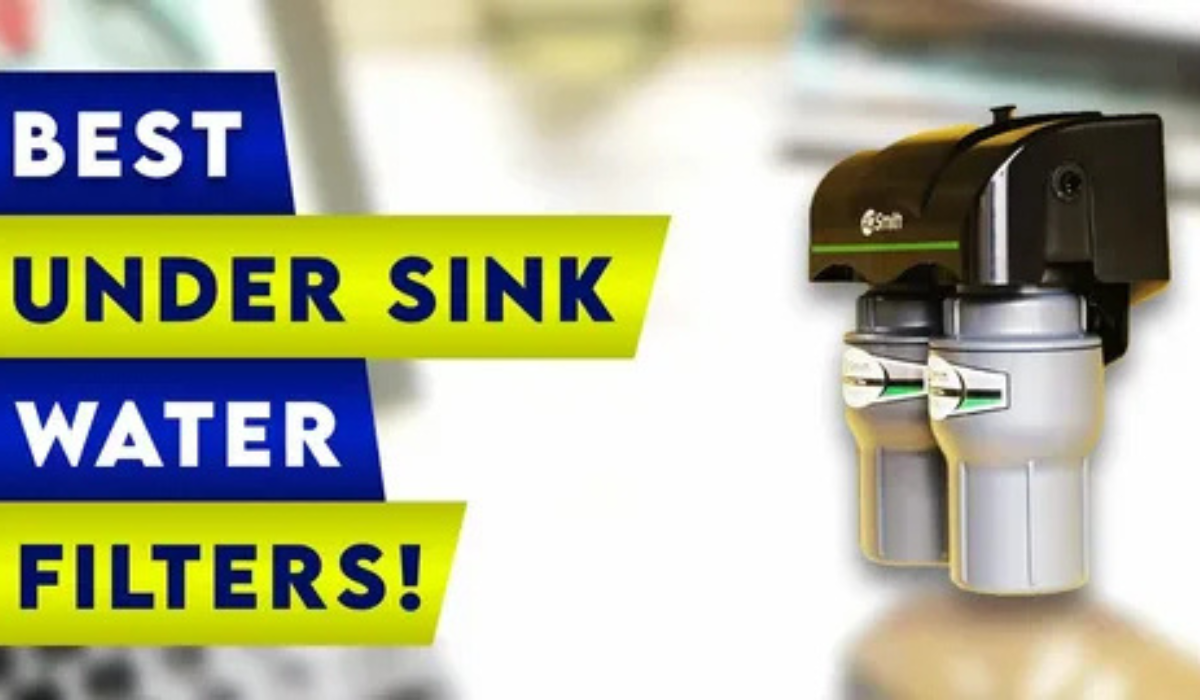
You turn on the kitchen tap, fill a glass, and notice something you don’t like. Maybe the water smells like chlorine. Maybe you are concerned about lead, PFAS, or other contaminants that you cannot see, taste, or smell. Or perhaps you are simply tired of filling a pitcher and waiting for it to filter.
An under-sink water filter can make drinking water more convenient, but choosing one is not as simple as buying the system with the most filtration stages or the biggest contaminant-removal number on its packaging.
If you’re planning other kitchen improvements, explore our Kitchen Ideas for more ways to make your space practical and comfortable.
The best under-sink water filters is the one that addresses the contaminants in your water, fits your kitchen, and is practical to maintain for years.
In this guide, we’ll compare five systems worth considering, explain the difference between reverse osmosis and carbon filtration, and walk through the details that matter before you buy. I’ll also show you how to check a filter’s certification instead of relying on marketing claims.
What Is an Under-Sink Water Filter?
An under-sink water filter is a point-of-use water treatment system installed beneath your kitchen sink. It filters water at one location, usually supplying a dedicated drinking-water faucet or connecting to your existing kitchen faucet.
Unlike a pitcher, which holds a limited amount of water, an under-sink system can provide filtered water whenever you need it. Depending on the model, it may use carbon cartridges, sediment filters, reverse osmosis membranes, or a combination of technologies.
But here’s something worth remembering: a filter’s technology tells you how it works, not automatically what it removes. You still need to check the manufacturer’s specific contaminant-reduction claims and independent certification.
The 5 Under-Sink Water Filters Worth Comparing
These five systems represent different approaches to under-sink filtration. They are a comparison shortlist based on the product types and models covered in consumer-review research—not a claim that we personally tested each system or that every model is the current best buy.
Prices, availability, replacement parts, and certification details can change. Confirm the exact model and its current documentation before purchasing.
1. Waterdrop G3P800 — A Tankless Reverse-Osmosis Option
The Waterdrop G3P800 is a tankless reverse-osmosis system. Instead of storing filtered water in a large tank, a tankless design produces water as you use it.
That can be appealing if your kitchen cabinet is already crowded with cleaning supplies, a garbage disposal, or plumbing. Some versions and configurations also include a smart faucet or display, which can make it easier to monitor system information.
Why consider it: A tankless RO system may suit households that want reverse-osmosis filtration while keeping more cabinet space available.
What to check before buying:
- The exact model’s certified contaminant-reduction claims.
- Its actual water-production rate under your household’s pressure and temperature conditions.
- Whether the included faucet fits your sink or countertop.
- Filter replacement prices and how often each cartridge needs changing.
- The system’s wastewater ratio and what that ratio means under your conditions.
Don’t assume a high advertised gallons-per-day figure means the system will deliver that amount continuously in your kitchen. Production can vary with water pressure, temperature, and other conditions.
2. Waterdrop X12 — A Higher-Capacity Tankless RO Alternative
The Waterdrop X12 is another tankless reverse-osmosis option, positioned around higher water production and features such as mineralization or a smart faucet, depending on the configuration.
This type of system may be attractive to a household that uses filtered water frequently for drinking, cooking, and filling bottles.
Why consider it: It offers another tankless RO design to compare if your household needs a higher volume of filtered water.
What to check before buying:
- Whether its advertised production rate is suitable for your actual water pressure.
- The manufacturer’s explanation of its mineralization feature.
- Its specific NSF/ANSI certification and reduction claims.
- Replacement-filter costs and availability.
- Whether the installation requires an electrical outlet and a drain connection.
A mineralization feature is not a substitute for contaminant testing. Choose the system for its verified filtration performance first, then treat taste or mineral features as secondary preferences.
3. iSpring RCC7AK — A Traditional RO System With Remineralization
The iSpring RCC7AK is a conventional reverse-osmosis system with a storage tank and a remineralization stage.
Traditional RO systems often require more cabinet space than tankless models because the storage tank takes up room. In return, a tank can hold a supply of filtered water ready for use.
Why consider it: It is worth comparing if you prefer a conventional RO setup and want to evaluate a remineralization stage.
What to check before buying:
- Tank dimensions and clearance for filter changes.
- The faucet and drain connections included in the kit.
- The exact model’s current certification status.
- The recommended replacement schedule for each filter and membrane.
- Whether you can comfortably access the system for maintenance.
One practical point: don’t measure only the space where the tank will sit. Leave enough room to remove cartridges and reach shutoff valves. A system that fits on installation day but cannot be serviced easily is a poor long-term choice.
4. APEC ROES-50 — A Conventional RO System to Compare on Value
The APEC ROES-50 is a traditional reverse-osmosis system that can be included in a budget-focused comparison.
Conventional RO systems typically use multiple filtration stages, including a membrane, and may have a storage tank. However, the number of stages alone does not establish how effectively a system reduces a particular contaminant.
Why consider it: It provides a conventional RO option to compare against more feature-heavy tankless systems.
What to check before buying:
- The current price of the complete system.
- The cost of genuine replacement cartridges and membranes.
- The specific contaminant-reduction claims supported by certification.
- The tank’s capacity and cabinet-space requirements.
- Whether the faucet, tubing, and fittings are compatible with your plumbing.
A low purchase price can be misleading if replacement filters are expensive or difficult to find. Compare the system’s expected maintenance cost over several years, not just the price on the product page.
5. Aquasana AQ-5300 — A Non-RO Carbon-Filtration Option
The Aquasana AQ-5300 belongs in the comparison because it represents a different approach: a non-reverse-osmosis filtration system.
Carbon-based systems can be a sensible choice when your main concerns are contaminants that the particular filter is certified to reduce, such as chlorine-related taste and odor. They generally do not use an RO membrane, so they avoid the RO process’s concentrated wastewater stream.
Why consider it: It may suit someone who wants an under-sink filter without choosing a reverse-osmosis system.
What to check before buying:
- Which contaminants the exact model is certified to reduce.
- Its rated capacity and replacement-filter costs.
- Its flow rate and whether it supplies enough water for your household.
- Whether it retains minerals or changes water chemistry—and what the manufacturer actually documents.
- The installation requirements and available replacement cartridges.
A non-RO system is not automatically less effective, and an RO system is not automatically necessary. The right choice depends on your water and your filtration goals.
Reverse Osmosis vs. Carbon Filtration: Which Is Better?
This is one of the biggest decisions you’ll make when choosing an under-sink filter.
| Feature | Carbon filtration | Reverse osmosis |
|---|---|---|
| Main process | Adsorption and filtration through media such as activated carbon | Water passes through a semipermeable membrane under pressure |
| Common use | Reducing certain taste, odor, and other certified contaminants | Reducing a broader range of dissolved contaminants, depending on the system |
| Wastewater | Typically does not create an RO reject-water stream | Produces a reject-water stream during operation |
| Cabinet space | Often compact, depending on design | May require a tank or a larger tankless unit |
| Maintenance | Cartridge replacement | Pre-filters, membrane, and other cartridges as specified |
A common mistake is buying RO simply because it sounds more advanced. If your water has a taste problem that a certified carbon filter can address, a simpler system may be all you need.
On the other hand, if your water report identifies a contaminant that your chosen carbon system is not certified to reduce, don’t assume it will handle the problem. You may need a different technology or a more specific treatment plan.
How to Check Whether an Under-Sink Filter Actually Removes What You Need
This is the step I would not skip, especially if you are buying a filter because of a health concern.
Understand the NSF/ANSI standards
The standards are not rankings. They describe different types of treatment claims and product requirements.
- NSF/ANSI 42: Aesthetic effects, including certain chlorine, taste, and odor reduction claims.
- NSF/ANSI 53: Reduction of specific contaminants with health effects, such as lead, when that exact claim is listed.
- NSF/ANSI 58: Reverse-osmosis drinking-water treatment systems.
A filter certified to one standard is not automatically certified for every contaminant associated with that standard. Certification may apply to specific reduction claims, product configurations, or components.
Look up the exact model
Use the official NSF product listings to check the brand and model. Look for the contaminant you care about—not merely a logo or a broad statement that the filter is “NSF certified.”
If your concern is lead, for example, confirm that the exact system has a lead-reduction claim. If your concern is PFAS, check the specific PFAS claim and the applicable certification. If you cannot find the model or claim, contact the manufacturer before relying on it.
Pro tip: A filter’s certification is more useful when you match it to a recent water test or a reliable water-quality report. Don’t buy a system based only on a generic list of contaminants that might be present in water somewhere.
Don’t Forget Installation, Space, and Maintenance
Even a well-performing filter can become a frustrating purchase if it is awkward to install or expensive to keep running.
Measure your cabinet before ordering
Measure the available height, width, and depth. Then check:
- Space needed for the tank or filter housing.
- Room to remove cartridges.
- Clearance around the garbage disposal and drain plumbing.
- Access to the shutoff valve.
- Whether an electrical outlet is required.
If the system uses a dedicated faucet, you’ll also need a suitable sink or countertop opening. Some households may be able to connect a compatible system to an existing faucet, but don’t assume every model supports that arrangement.
Calculate the real maintenance cost
Replacement intervals vary by system, water quality, and household usage. Some cartridges may need replacement every several months, while an RO membrane may last longer. Follow the exact manufacturer’s instructions rather than using a universal schedule.
Before you buy, calculate:
Annual filter cost = replacement cartridges and membranes needed over a year, based on the manufacturer’s schedule and your usage.
For example, imagine two households compare filters. Household A buys a cheaper system but discovers that its cartridges are costly and hard to source. Household B pays more upfront for a system with readily available replacement filters. Over several years, Household B may find the system easier and less expensive to maintain.
Also consider the time and effort required to change cartridges. A filter that needs a plumber for every routine replacement may not be the most convenient option.
A Simple Way to Choose the Right Filter
Let’s say you are choosing a filter for a family kitchen.
First, you check your water-quality report and find that your main concern is a specific contaminant. You look for a filter certified to reduce that contaminant. Next, you measure the cabinet and discover that a large storage tank would leave very little room for other items. You compare tankless models, then check their replacement costs and installation requirements.
That process is more reliable than choosing the model with the most stages, the highest advertised flow rate, or the most impressive-looking faucet.
Here’s how I would narrow the options:
- Choose a carbon-based system if it is certified for the contaminants you need to reduce and you prefer a simpler setup without RO wastewater.
- Choose reverse osmosis if you need the specific contaminant-reduction capabilities supported by that system’s certification and are comfortable with its installation and maintenance.
- Choose tankless or tank-style RO based on cabinet space, water demand, and the system’s actual performance—not the design label alone.
- Choose a system with available replacement filters so maintenance doesn’t become an expensive headache.
Final Thoughts
An under-sink water filter can make filtered water more convenient, but the best purchase starts with your water—not the product’s marketing.
Compare the five systems above by their verified contaminant-reduction claims, installation needs, cabinet fit, and long-term maintenance costs. If you’re concerned about a particular contaminant, check your water report and the exact filter certification before buying.
The smartest filter is not necessarily the most expensive or the one with the most stages. It’s the one that treats the problem you actually have, fits your kitchen, and remains practical to maintain.