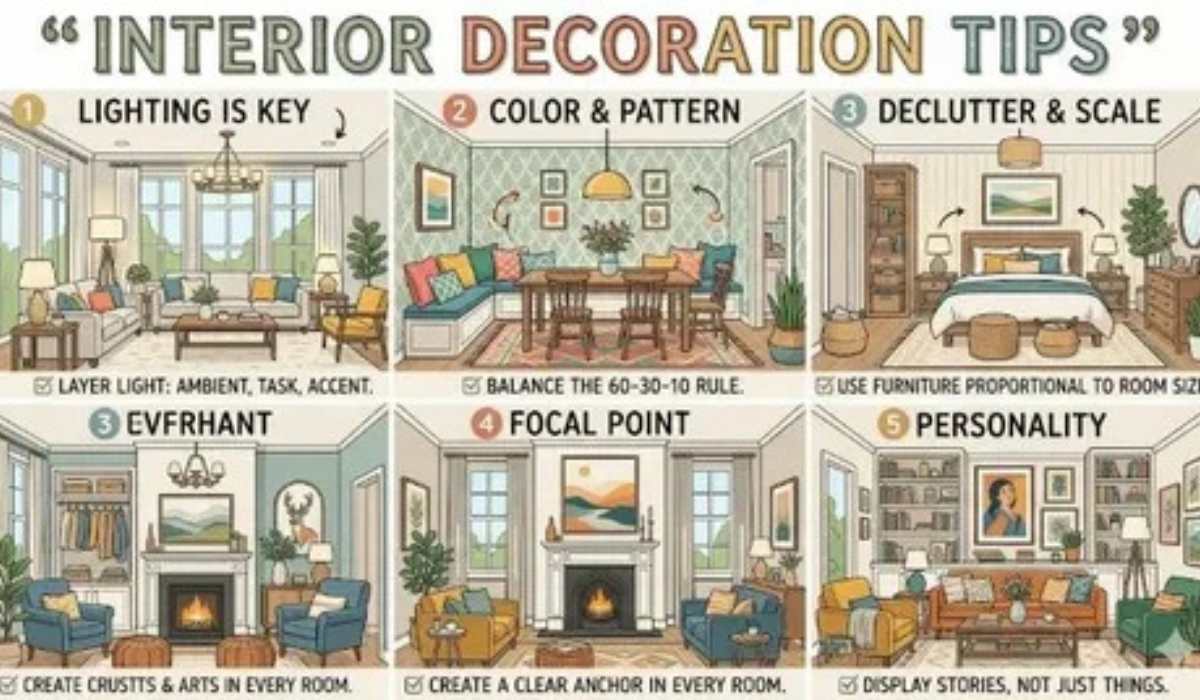
Have you ever walked into a beautifully decorated room and still felt that something was missing? Perhaps the furniture looks expensive, the wall colors are attractive, and the decorations match perfectly, but the room does not feel comfortable or practical. This is one of the most common problems homeowners face when planning their interiors.
So, what is the most important thing in interior design MintPalment? The answer is creating a balance between functionality, proportion, comfort, and visual appeal. A beautiful room should not only look good in photographs but also support the way you live every day.
Many people start decorating by choosing paint colors, buying attractive furniture, or following the latest interior design trends. However, a better approach is to understand the space first. You need to consider its dimensions, purpose, natural lighting, and the people who will use it. Once these fundamentals are right, choosing colors, materials, and decorative accessories becomes much easier.
In this guide, we will explore the most important principles of interior design, explain how they work together, and share practical ways to create a comfortable and attractive home without unnecessary spending.
What Is the Most Important Thing in Interior Design MintPalment?
The most important thing in interior design is making sure that a space works well for the people using it while maintaining a comfortable and visually balanced appearance.
Think about your living room. You might have a beautiful sofa, an attractive coffee table, and expensive curtains. However, if people cannot walk comfortably, the furniture blocks the windows, or there is nowhere to store everyday belongings, the room is not properly designed.
Good interior design considers several connected elements:
- Functionality: Every room should support its intended activities.
- Proportion and scale: Furniture and decorations should suit the available space.
- Comfort: The room should feel pleasant and practical.
- Lighting: Natural and artificial lighting should support the room’s purpose.
- Visual balance: Colors, textures, furniture, and decorations should work together.
- Personal style: Your home should reflect your preferences and lifestyle.
In my experience, homeowners often focus too heavily on decoration and overlook the relationship between furniture and available space. A better way to approach interior design is to plan the layout first and decorate afterward.
Pro tip: Before purchasing anything, spend a few days observing how you use each room. You may discover that you need better storage or more walking space rather than another decorative item.
1. Start With Functionality Before Decoration
Functionality is the foundation of a successful interior design project. Every room has a purpose, and its arrangement should make everyday activities easier.
For example, a living room should provide comfortable seating, space for conversation, and easy access to other areas of the home. A bedroom should support relaxation while providing enough storage for clothing and personal belongings. Similarly, a kitchen needs an organized arrangement that makes cooking, cleaning, and food preparation convenient.
Most people get this wrong by purchasing furniture simply because they like its appearance. A large dining table might look impressive in a furniture showroom, but it may not be suitable for a small dining area.
Before making design decisions, consider:
- What activities will take place in this room?
- How many people will regularly use the space?
- Where should furniture be positioned?
- How much storage is required?
- Are there any accessibility or movement requirements?
How functionality changes a room
Imagine a family with a small living room. Initially, they place a large sofa, two additional chairs, a decorative table, and several cabinets inside it. Although every item looks attractive individually, the room feels crowded.
Instead of purchasing more decorations, they remove one unnecessary chair, choose a smaller coffee table, and introduce a storage cabinet. Suddenly, the room becomes easier to use without requiring an expensive renovation.
Pro tip: Design around your daily routine rather than copying a furniture showroom. Your home should support your lifestyle, not create additional work.
2. Understand Proportion and Scale
Proportion and scale are among the most overlooked principles of interior design. They describe how the size of furniture, decorations, and architectural features relates to the surrounding space.
A room can contain beautiful furniture and carefully selected colors but still look uncomfortable when the dimensions do not work together.
Consider these common situations:
- An oversized sofa dominates a small living room.
- A tiny rug looks disconnected from the seating arrangement.
- Small artwork appears lost on a large empty wall.
- A large wardrobe leaves insufficient space around the bed.
- A small dining table looks out of place in a spacious dining room.
The problem is not necessarily the furniture’s quality or style. It is the relationship between its size and the room.
Practical measurements to consider
Although every room is different, some general measurements can help you plan furniture placement.
| Interior element | Practical guideline |
|---|---|
| Living room rug | Extend beyond the sofa’s sides to anchor the seating area |
| Artwork | Around two-thirds the width of the furniture beneath it can be a useful starting point |
| Artwork height | Place its center near average eye level, adjusting for the room |
| Main walkways | Around 75–90 cm of clear space where possible |
| Bedroom clearance | Around 60 cm beside the bed where space allows |
| Dining chairs | Allow approximately 75 cm behind chairs for movement |
These are starting points rather than strict rules. Furniture dimensions, household needs, door openings, and accessibility requirements may call for different measurements.
Test furniture sizes before buying
One simple technique is to use masking tape to mark the dimensions of a sofa, rug, or table on the floor.
You can also cut paper to match an artwork’s dimensions and temporarily attach it to the wall. This allows you to judge its size before making a purchase.
Pro tip: Always measure doorways, staircases, and entryways too. A sofa that fits your living room is not useful if you cannot get it through the front door.
3. Create a Comfortable and Practical Layout
A good layout determines how people move through and interact with a room. Even a spacious home can feel uncomfortable when furniture is poorly arranged.
When planning a layout, think about movement first. People should be able to enter a room, reach the furniture, and move between different areas without constantly walking around obstacles.
For a living room, arrange seating so people can comfortably communicate with one another. In a bedroom, make sure there is sufficient room to access wardrobes, bedside tables, and other essential furniture.
For open-plan homes, you can also create separate functional areas without building additional walls.
For example:
- Use a rug to define the living room seating area.
- Position a dining table near the kitchen.
- Place a bookshelf or console to create a visual division.
- Use lighting to distinguish different activities.
Keep small rooms visually open
Small rooms require more careful planning because unnecessary furniture can quickly reduce available space. For more room-specific inspiration, read these small bedroom interior design ideas for practical ways to improve furniture placement, storage, lighting, and available space.
Consider these ideas:
- Choose furniture with a smaller footprint.
- Use wall-mounted shelves instead of bulky cabinets.
- Select beds or tables with built-in storage.
- Keep frequently used walking paths clear.
- Avoid placing too many decorative objects on surfaces.
Pro tip: Do not automatically push every piece of furniture against a wall. Sometimes, moving a sofa slightly away from the wall creates a more balanced seating arrangement.
4. Choose Colors That Support the Room’s Purpose
Color is one of the most noticeable elements of interior design because it influences the atmosphere of a space.
However, choosing colors should involve more than selecting your favorite shade. You should also consider room dimensions, natural light, furniture finishes, and the overall appearance you want to achieve.
Light colors such as cream, soft white, and pale gray can help reflect available light and create an open feeling. Darker shades such as navy, charcoal, and deep green can introduce visual depth and create a more intimate atmosphere.
Neither option is automatically better. The right choice depends on the room and how you want it to feel.
How to build a coordinated color scheme
A practical approach is to choose:
- A main color: Use it for larger surfaces such as walls.
- A secondary color: Introduce it through furniture, curtains, or rugs.
- An accent color: Add smaller touches through artwork, cushions, or accessories.
For example, a living room with warm white walls, natural wooden furniture, and muted green accessories can feel welcoming without becoming visually busy.
Remember that paint colors can look different under daylight and artificial lighting. Always test a small sample before painting an entire room.
Pro tip: Choose your large furniture and flooring finishes before finalizing wall paint. It is usually easier to find a suitable paint color than to replace an expensive sofa or floor finish.
5. Use Lighting to Improve Comfort and Appearance
Lighting is not simply something you add to make a room visible. It also influences the atmosphere, usability, and appearance of your interior.
A common mistake is relying on a single ceiling light to illuminate an entire room. This may provide general visibility, but it often creates an uninteresting atmosphere and does not support specific activities.
A better approach is to combine different lighting types.
Three important types of interior lighting
Ambient lighting
Ambient lighting provides general illumination. Ceiling fixtures, recessed lights, and suitable overhead lighting systems are common examples.
Task lighting
Task lighting supports specific activities such as reading, cooking, studying, and working. Desk lamps, under-cabinet kitchen lights, and bedside reading lamps are useful examples.
Accent lighting
Accent lighting highlights particular features, including artwork, decorative shelves, architectural details, and indoor plants.
Natural light is equally important. Keep windows unobstructed where possible, use suitable curtains, and arrange furniture without unnecessarily blocking daylight.
Pro tip: Before purchasing additional lights, identify the areas that feel too dark. Sometimes, repositioning furniture or using a suitable floor lamp can solve the problem without changing the entire lighting system.
6. Select Furniture That Combines Comfort and Quality
Furniture has a major influence on how a room looks and feels. However, attractive furniture does not automatically mean comfortable furniture.
When choosing a sofa, for example, consider its seating depth, height, material, and support. For a dining table, think about the number of people who will use it and whether chairs can move comfortably.
The same principle applies to beds, wardrobes, desks, and storage cabinets.
Before purchasing furniture, consider:
- Does it fit the room’s dimensions?
- Is it comfortable for regular use?
- Is the material suitable for your household?
- Is it easy to clean and maintain?
- Does it provide enough practical value?
- Will it remain useful as your needs change?
Consider multifunctional furniture
Multifunctional furniture is especially helpful in apartments and smaller homes.
Examples include:
- Storage beds for bedrooms.
- Extendable dining tables for flexible seating.
- Foldable desks for compact workspaces.
- Storage ottomans for living rooms.
- Wall-mounted desks for limited floor areas.
These options can help reduce clutter while making better use of available space.
Pro tip: Spend more attention on furniture you use every day. A comfortable sofa or supportive mattress may provide more long-term value than several decorative purchases.
7. Combine Materials and Textures for Visual Interest
A room can feel flat when every surface has the same finish. Different materials and textures help create visual interest without requiring complicated decoration.
Wood, glass, metal, stone, cotton, linen, and wool can all contribute to the overall character of a room.
For example, a living room with wooden furniture, a soft fabric sofa, a textured rug, and a glass coffee table can create a balanced combination of natural warmth and modern simplicity.
However, combining too many materials can make a room feel disorganized.
A better approach is to select a few complementary finishes and repeat them throughout the space.
Consider these combinations:
- Wood with linen for a warm and natural appearance.
- Glass with metal for a clean, contemporary look.
- Stone with natural wood for visual contrast.
- Soft fabrics with smooth furniture finishes for added depth.
Pro tip: Use texture to introduce variety when you prefer a simple color palette. Different materials can make a neutral room feel interesting without adding too many colors.
8. Make Your Personal Style Part of the Design
A well-designed home should reflect the people who live in it. Following popular trends can provide inspiration, but copying an entire interior from a magazine or social media image does not guarantee that it will suit your lifestyle.
Your personal preferences can appear through artwork, photographs, indoor plants, souvenirs, books, and decorative accessories.
For example, someone who enjoys reading might create a small reading corner with a comfortable chair, a floor lamp, and a bookshelf. A family that enjoys spending time together might prioritize flexible seating and an organized entertainment area.
These choices make a home feel personal rather than like a showroom. If you prefer a simpler and less crowded interior, these minimalist home decor essentials can help you choose practical furniture, lighting, textures, and decorative accessories without overcrowding your space.
Balance trends with timeless elements
Interior design trends change frequently. Instead of redesigning your entire home whenever a new style becomes popular, use flexible decorative elements.
- Keep expensive furniture relatively timeless.
- Introduce current trends through cushions and accessories.
- Choose artwork that reflects your interests.
- Experiment with removable decorations.
- Avoid purchasing something simply because it is popular.
Pro tip: Before buying a decorative item, ask yourself whether you genuinely like it and where you will use it. If it has no clear place or purpose, it may eventually become unnecessary clutter.
9. Avoid Common Interior Design Mistakes
Even homeowners with good design ideas can make mistakes when they rush into decorating.
Some problems are easy to prevent with proper planning.
| Common mistake | Better approach |
|---|---|
| Buying furniture without measuring | Record room and furniture dimensions first |
| Choosing appearance over comfort | Test furniture before purchasing |
| Overcrowding a room | Keep only useful and meaningful items |
| Ignoring natural light | Keep windows accessible and unobstructed |
| Using too many colors | Develop a coordinated color palette |
| Choosing a rug that is too small | Match the rug to the seating arrangement |
| Following every new trend | Focus on long-term usability |
| Ignoring storage | Include practical storage solutions |
One mistake deserves particular attention: buying everything at once.
When homeowners purchase furniture, curtains, rugs, lighting, and decorations in one shopping trip, they may end up with items that do not work together.
A more reliable approach is to complete the room gradually. Start with essential furniture, check the layout, introduce suitable lighting, and add decorations only when the space needs them.
Pro tip: Live with your basic furniture arrangement for a few days before making additional purchases. You may discover that you need fewer items than you originally expected.
10. How to Improve Interior Design on a Limited Budget
You do not need expensive furniture or a complete renovation to improve your home’s appearance. Many useful changes involve better organization and more thoughtful use of existing items. You can also explore these practical interior home improvements for more ideas on improving furniture arrangements, lighting, storage, and comfort without unnecessary renovation expenses.
Here are some affordable improvements:
Rearrange existing furniture: Changing the position of a sofa, table, or bookshelf can improve movement and create a more balanced layout.
Declutter regularly: Remove unnecessary belongings and keep everyday items organized. A clean room often feels more spacious.
Refresh soft furnishings: New cushion covers, curtains, or a suitable rug can introduce color and texture without replacing major furniture.
Use indoor plants: Plants can introduce natural color and make suitable indoor spaces feel more welcoming. Choose varieties appropriate for the available light and household conditions.
Improve lighting: Replace unsuitable bulbs with appropriate lighting options or introduce a task lamp where additional illumination is needed.
Refresh walls carefully: A fresh coat of paint or a thoughtfully placed piece of artwork can improve a room without a major renovation.
Pro tip: Set a budget for each room and prioritize improvements according to their practical value. Fixing poor lighting or insufficient storage may be more useful than buying expensive decorations.
11. A Simple Real-World Example: Planning a Small Living Room
Imagine a family living in a modest home with a small living room. They want the space to look modern but cannot afford a complete renovation.
Initially, the room contains a large sofa, an oversized coffee table, several decorative items, and heavy curtains. There is little room to walk, and natural light is limited.
Instead of spending money on new decorations, the family starts with the room’s basic requirements.
Step 1: Improve functionality. They remove unnecessary furniture and keep only the seating and storage they regularly need.
Step 2: Correct the proportions. They replace the oversized coffee table with a smaller option that better suits the sofa.
Step 3: Improve lighting. They use lighter window treatments and introduce a suitable floor lamp.
Step 4: Coordinate colors. They select a simple neutral palette with a few green and wooden accents.
Step 5: Add personal details. They introduce a small plant and a family photograph.
The result is a more organized and comfortable living room without expensive structural changes.
The important lesson is that good interior design is not always about buying better things. Sometimes, it is about making better decisions with what you already have.
Frequently Asked Questions
What is the most important thing in interior design MintPalment?
The most important thing is balancing functionality, proportion, comfort, and visual appeal. A successful interior should support everyday activities while maintaining an attractive and organized appearance.
Is functionality more important than appearance in interior design?
Functionality should generally come first because a room needs to support the people using it. However, appearance also matters. The best interiors combine practical layouts with suitable colors, materials, lighting, and decorations.
Why is proportion important in interior design?
Proportion ensures that furniture and decorative elements suit the dimensions of a room. Incorrect proportions can make a room feel crowded, empty, or visually unbalanced, even when individual items are attractive.
How can I make a small room look more spacious?
Use appropriately sized furniture, keep unnecessary items to a minimum, maintain clear walking paths, and make good use of natural light. Multifunctional furniture and wall-mounted storage can also help.
What are the five basic principles of interior design?
Five commonly discussed principles are balance, proportion, scale, rhythm, and harmony. These principles help create interiors where different elements work together visually and practically.
Can I improve my home’s interior design without hiring a professional?
Yes. Many improvements can be completed independently through better furniture placement, decluttering, coordinated colors, and suitable lighting. However, major renovations, structural changes, and complicated technical projects may require professional guidance.
Does expensive furniture make a home look better?
Not necessarily. Furniture should suit the room, provide comfort, and meet household needs. Well-selected, affordable furniture can create a more attractive and functional interior than expensive items that do not fit the space.
Final Thoughts
So, what is the most important thing in interior design MintPalment? The answer is not simply choosing attractive colors, purchasing expensive furniture, or following the latest decorating trends. It is creating a space where functionality, proportion, comfort, and personal style work together.
Start by understanding how you use each room. Measure your available space, plan furniture placement, improve lighting, and select materials that complement your home’s overall appearance. Once these fundamentals are in place, decorative choices become easier and more meaningful.
Remember that a beautiful home does not have to be expensive or perfectly styled. It should make everyday life easier, reflect your personality, and provide a comfortable environment for the people who live there. The best interior design is not the one that looks the most expensive; it is the one that works best for you.
References
1. https://www.asid.org/about/interior-design
2. https://nkba.org/planning-guidelines/
3. https://www.hgtv.com/design/decorating/design-101/the-3-principles-of-interior-design