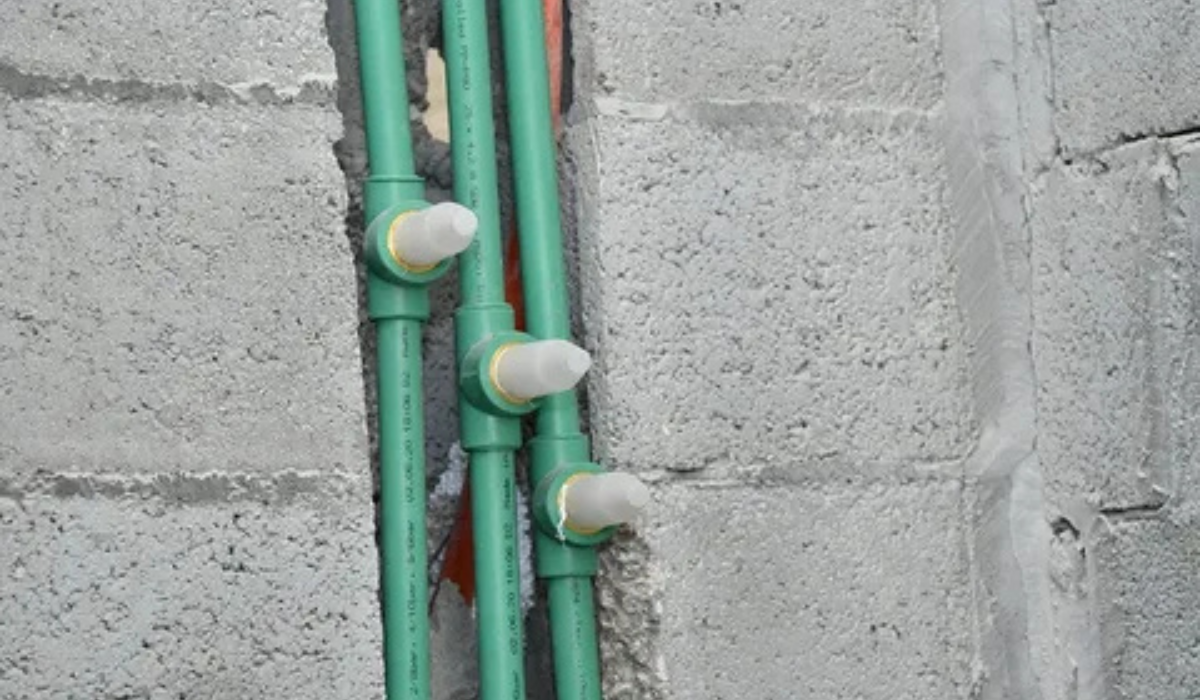
Plumbing on exterior wall can save space, simplify certain remodeling projects, and make pipes easier to access. But there is one problem many homeowners overlook: a pipe that works perfectly in mild weather can freeze when cold air reaches it during winter. Once a pipe freezes, you may face leaks, damaged walls, expensive repairs, and unexpected disruption to your home.
So, can you install plumbing on an exterior wall? Yes, in some circumstances. However, the answer depends on your local building codes, climate, wall construction, pipe type, and the protection provided against freezing. Before starting any major project, review these home renovation ideas to help plan repairs, prioritize essential work, and avoid costly mistakes.
If you are planning a bathroom renovation, adding a kitchen sink, or repairing an existing plumbing system, you need to understand more than just where the pipes fit. You also need to know how the wall handles heat, moisture, and air movement.
In this guide, we will explain when exterior-wall plumbing makes sense, what building codes generally require, how to protect pipes from freezing, and which installation mistakes are worth avoiding. The goal is simple: help you make a practical decision before you close the wall with drywall, tile, or another expensive finish.
Can You Install Plumbing on an Exterior Wall?
Yes, plumbing can sometimes be installed in an exterior wall, but the installation must meet the applicable local plumbing and building requirements. The main concern in cold climates is whether the pipes are adequately protected from freezing temperatures.
An exterior wall separates your home’s conditioned interior from the outdoor environment. Its temperature can change considerably with the weather, and gaps in insulation or air sealing can expose pipes to cold air even when the room itself feels comfortable.
For this reason, placing a water supply pipe inside an exterior wall is generally less desirable than routing it through an interior partition when a practical alternative exists.
However, not every project offers that flexibility. A bathroom may be located against an outside wall, a kitchen layout may limit the available pipe routes, or an existing building may require a renovation that avoids major structural changes.
Before deciding, consider these questions:
- Does the pipe carry pressurized water, drain wastewater, or serve as a plumbing vent?
- Will the pipe sit inside the insulated wall cavity or outside the building?
- Does the local code permit the proposed arrangement?
- Can you provide adequate insulation and control cold-air leakage?
- Will the pipe remain accessible for inspection and future repairs?
These distinctions matter because water supply lines, drainage pipes, and vent pipes have different installation requirements.
Pro tip: Before choosing a pipe route, draw a simple plan showing the fixtures, pipe locations, insulation, and exterior sheathing. A few minutes of planning can reveal a safer route before construction begins.
What Do Building Codes Say About Plumbing on Exterior Walls?
Building codes are important because exterior plumbing can create risks that are not obvious during installation. A pipe may look properly insulated, yet still be exposed to freezing conditions because of gaps in the wall assembly or inadequate protection.
The International Residential Code (IRC), published by the International Code Council, addresses this issue in Section P2603.5, titled Freezing, in the 2021 edition. It states that in locations with winter design temperatures of 32°F (0°C) or lower, water, soil, or waste pipes must not be installed in exterior walls or other locations exposed to freezing temperatures unless adequate protection is provided through insulation, heat, or both.
2021 INTERNATIONAL RESIDENTIAL CODE (IRC)
This provision is important, but there is a distinction worth understanding: the IRC is a model code, not automatically the governing law in every location. Local authorities adopt particular editions and may introduce amendments.
Which rules should you check?
Before beginning your project, confirm the following:
- Local plumbing code: Check the rules that apply to your building and proposed pipe installation.
- Freeze protection: Determine what protection is required for your climate and wall construction.
- Permits and inspections: Ask the local building department whether your project requires a permit or inspection.
- Approved materials: Confirm that the proposed pipes, fittings, insulation, and any heating equipment are suitable for their intended use.
Code wording can change between editions. For example, a proposed change published by the ICC for the 2024 IRC revises the freezing provision to emphasize keeping piping within the building’s thermal envelope. A proposal should not be confused with an automatically adopted requirement; check the final edition and local amendments that govern your project.
ICC
Pro tip: Ask your local building department about the exact pipe location and wall assembly, rather than simply asking whether exterior plumbing is allowed. Specific details can make a difference to the answer.
Why Plumbing Pipes Freeze Inside Exterior Walls
Water freezes when its temperature drops sufficiently, but the conditions surrounding a pipe determine how quickly that happens. Exterior walls are particularly challenging because they separate heated indoor space from outdoor temperatures.
Three common problems increase the risk.
1. Inadequate insulation behind the pipe
A pipe can be surrounded by insulation and still be poorly protected if most of the insulation sits between the pipe and the room rather than between the pipe and the outdoor environment.
The goal is to reduce heat loss toward the exterior. When pipes must be installed in an exterior wall, the U.S. Department of Energy’s Building America Solution Center recommends placing as much cavity insulation as possible between the pipes and the outside surface of the wall.
Building America Solution Center
2. Gaps that allow cold air to enter
Air leaks around framing, sheathing, and pipe penetrations can carry cold outdoor air into a wall cavity. This movement can undermine the protection provided by insulation.
For example, a small gap around a pipe may seem harmless during construction. During a cold spell, however, air moving through that opening can expose the pipe to colder conditions than expected.
Air sealing and insulation work together, but they are not interchangeable. Insulation slows heat transfer; air sealing limits unwanted air movement.
3. Long periods of cold weather
A wall may perform adequately during a brief cold spell but become more vulnerable when outdoor temperatures remain low for several days.
Pipes near the exterior sheathing, in poorly insulated cavities, or in unheated spaces deserve particular attention. The risk also depends on the building’s construction and how effectively its interior heat reaches the pipe location.
Pro tip: Do not judge freeze protection by how warm the bathroom feels. A comfortable room does not guarantee that the back of an exterior-wall cavity is warm enough to protect its plumbing.
How to Install Plumbing on an Exterior Wall More Safely
If an exterior-wall route is necessary, the design should be planned before the pipes are covered. The most effective approach combines suitable pipe placement, correctly installed insulation, air sealing, and any additional protection required by the local code.
1. Position pipes toward the conditioned side
Where the wall design permits, keep water supply pipes toward the interior, warmer side of the insulation rather than directly against cold exterior sheathing.
The exact position depends on the framing and the wall’s thermal design. Avoid arrangements that leave the pipe outside the intended insulated and air-sealed space.
2. Install insulation behind and around the pipes
The Building America Solution Center describes practical approaches for insulating plumbing inside exterior walls. With fiberglass or mineral-wool batts, installers can split the batt lengthwise, fit part behind the pipes, and place the remainder in front. Properly fitted rigid foam may also be used as part of an appropriate wall assembly.
Building America Solution Center
The aim is to fill the available cavity without leaving gaps or compressing insulation in a way that reduces its performance.
3. Seal air leaks carefully
Seal suitable gaps around pipe penetrations and wall framing using compatible materials. The correct product depends on the location, the surrounding materials, fire-safety requirements, and the wall’s moisture-control design.
PNNL’s air-sealing guidance recommends sealing plumbing penetrations and avoiding water pipes along exterior walls when a practical alternative exists.
Building America Solution Center
4. Consider additional freeze protection when necessary
In particularly vulnerable locations, temperature-controlled electric heat tracing may be an option. It must be appropriate for the piping system and installed according to the product instructions and applicable electrical and building codes.
Heat tracing should not be treated as a substitute for a sound wall design. It also introduces equipment that must remain suitable, accessible, and properly maintained.
Pro tip: Before the wall is closed, have the installer photograph the pipe routing, insulation, and sealed penetrations. These records can help with future repairs and show what is hidden behind the finished wall.
Which Pipes Are Suitable for Exterior-Wall Plumbing?
The right pipe material depends on the type of plumbing, local code, water conditions, installation environment, and manufacturer specifications. No pipe material eliminates the need for proper freeze protection.
| Pipe material | Common use | What to consider |
|---|---|---|
| PEX | Hot and cold water supply | Flexible and often easier to route through framing; must be installed within its approved temperature and pressure limits. |
| Copper | Water supply | Durable when properly installed, but freezing can damage copper pipes and their fittings. |
| PVC | Drainage, waste, and vent applications where permitted | Lightweight and corrosion-resistant; check the product’s approved application and temperature limits. |
| ABS | Drainage, waste, and vent applications where permitted | Common in certain regions; confirm local approval and suitability for the installation. |
These materials are not interchangeable. For example, a product approved for a drainage application is not automatically suitable for pressurized drinking-water supply.
PEX may tolerate freeze-thaw conditions better than some rigid piping materials, but it is not freeze-proof. Connections, fittings, and surrounding components may still fail. PNNL identifies PEX as a potentially more robust option for freeze-thaw cycling than traditional copper, while still recommending measures to protect pipes from freezing. (Building America Solution Center)
Pro tip: Select the pipe material only after confirming the intended application and local approval. Then design the wall cavity around the pipe, rather than expecting the pipe material alone to solve the freezing problem.
What Are the Advantages and Disadvantages of Exterior Plumbing?
Exterior-wall plumbing is not automatically a bad choice. In some renovations, it may be the most practical route. The key is to weigh its convenience against the risks and additional work it may create.
Advantages
- More flexible room layouts: Pipes may be easier to route when the available interior walls are limited.
- Potentially simpler renovations: A suitable existing route may reduce the need to modify other parts of the building.
- Convenient access in some installations: Surface-mounted pipes can be easier to inspect and repair than concealed pipes, provided they remain accessible.
- Space planning: A carefully designed layout can help preserve usable interior space.
Disadvantages
- Greater freezing exposure: Pipes near cold exterior surfaces may require additional protection.
- Potential moisture damage: Leaks or condensation can affect insulation, framing, and interior finishes.
- More complicated repairs: Concealed pipes may require opening finished walls.
- Appearance concerns: Surface-mounted pipes may not suit the intended design.
- Additional design requirements: Insulation, air sealing, and freeze protection can add work and cost.
The financial trade-off depends on the building. A route that appears inexpensive during installation may become costly if it requires specialized protection or future wall repairs.
Pro tip: Compare the complete installation cost, including insulation, access panels, and future maintenance—not just the price of the pipe and labor.
A Real-World Example: A Bathroom Renovation in Michigan
A useful example comes from Fine Homebuilding, which reported a remodeler’s experience installing shower supply pipes in an exterior wall of an older home in Ann Arbor, Michigan.
The team sealed gaps in the exterior sheathing, applied spray foam behind the plumbing, installed Rockwool insulation, and placed a data logger between the hot- and cold-water supply lines. They also incorporated approximately two inches of expanded polystyrene (EPS) foam behind the pipes.
During an early-January cold spell when outdoor temperatures reached −6°F, the logger recorded a temperature of 54°F at its location. The reported results suggest that the particular wall assembly performed well under those observed conditions. (Fine Homebuilding)
What can we learn from this project?
- Preparation matters: The team addressed gaps in the exterior sheathing before covering the pipes.
- Insulation placement matters: They paid particular attention to the space behind the plumbing.
- Monitoring adds useful evidence: Temperature readings provided information about the actual conditions inside the wall.
However, this is one project, not a universal installation specification. Different wall assemblies, climates, exposure conditions, and building codes can produce different results.
The practical lesson is to design for the specific building and verify the installation rather than copying a single insulation thickness.
What Are the Warning Signs of Exterior-Wall Plumbing Problems?
Exterior-wall plumbing problems can remain hidden until the damage becomes noticeable. Regular checks are especially useful when pipes are concealed behind bathroom tiles, kitchen cabinets, or finished walls.
Watch for these warning signs:
- Water stains or discolored patches on walls.
- Peeling paint, bubbling finishes, or damp drywall.
- A persistent musty smell that may indicate moisture.
- Unexpected changes in water pressure.
- Unexplained increases in water consumption.
- Visible condensation around accessible pipes.
- Unusual gurgling or drainage problems that may indicate a separate drainage or vent issue.
None of these signs proves that a pipe has frozen or developed a leak. For example, reduced water pressure can have several causes, while a musty smell may come from another source of moisture. Regular checks and practical home maintenance tips can help homeowners notice minor problems before they lead to more extensive repairs
If you suspect a concealed leak, contact a qualified plumber to investigate before removing finished surfaces unnecessarily. If a pipe may have frozen, avoid using an open flame or other improvised heating method.
Pro tip: Take photographs of accessible plumbing and note any recurring damp areas. Keeping a record can help a plumber identify patterns and locate the underlying problem.
Frequently Asked Questions
Can water supply pipes run through an exterior wall?
Yes, in some circumstances. The installation must comply with the applicable local code and provide adequate protection against freezing where required. Routing water pipes through interior walls is generally preferable when practical.
Is plumbing on an exterior wall against code?
Not necessarily. The 2021 IRC addresses freezing in Section P2603.5 and permits relevant installations when adequate freeze protection is provided. Actual requirements depend on the adopted code edition, local amendments, and the conditions of the installation. (ICC Digital Codes)
How do you insulate plumbing in an exterior wall?
Use suitable pipe insulation, provide appropriate wall-cavity insulation behind the pipes, and seal relevant air leaks. The arrangement should be designed for the wall assembly and climate. Insulation alone does not guarantee that pipes will remain above freezing.
Is PEX better than copper for exterior-wall plumbing?
PEX can offer greater flexibility and better tolerance of some freeze-thaw conditions than copper. However, neither material should be considered freeze-proof. Proper installation, suitable fittings, and effective protection remain essential.
Can drainpipes and vent pipes also be installed in exterior walls?
Their installation depends on the applicable drainage and venting rules, the pipe’s intended function, and the risk of freezing. Do not assume that requirements for water supply pipes automatically apply to every drainage or vent pipe. Check the relevant code provisions for the particular system.
Should you hire a plumber for this work?
Professional advice is particularly valuable when pipes will be concealed inside an exterior wall, when the project involves structural framing, or when local code requirements are unclear. A qualified plumber can assess the pipe route, materials, insulation, access requirements, and any necessary permits or inspections.
Final Thoughts
Plumbing on an exterior wall can be workable, but the decision should never be based on convenience alone. The safest approach is to avoid exterior-wall water pipes when a practical interior route is available. If an exterior-wall installation is necessary, plan the insulation, air sealing, and freeze protection as part of the complete wall assembly.
Start by checking the applicable building code, then select suitable materials and ensure that the pipes are positioned and protected correctly. Consider future access and maintenance before covering the wall with drywall or tile.
The most important lesson is simple: a pipe that fits inside a wall is not necessarily a pipe that belongs there. Good planning helps protect the plumbing, the building, and the money you have invested in your renovation.
References
- International Code Council — 2021 International Residential Code, Chapter 26
- Pacific Northwest National Laboratory — Building America Solution Center: Insulating Plumbing Pipes
- Pacific Northwest National Laboratory — Air Sealing Plumbing and Piping
- Fine Homebuilding — Keep Pipes From Freezing in an Exterior Wall